
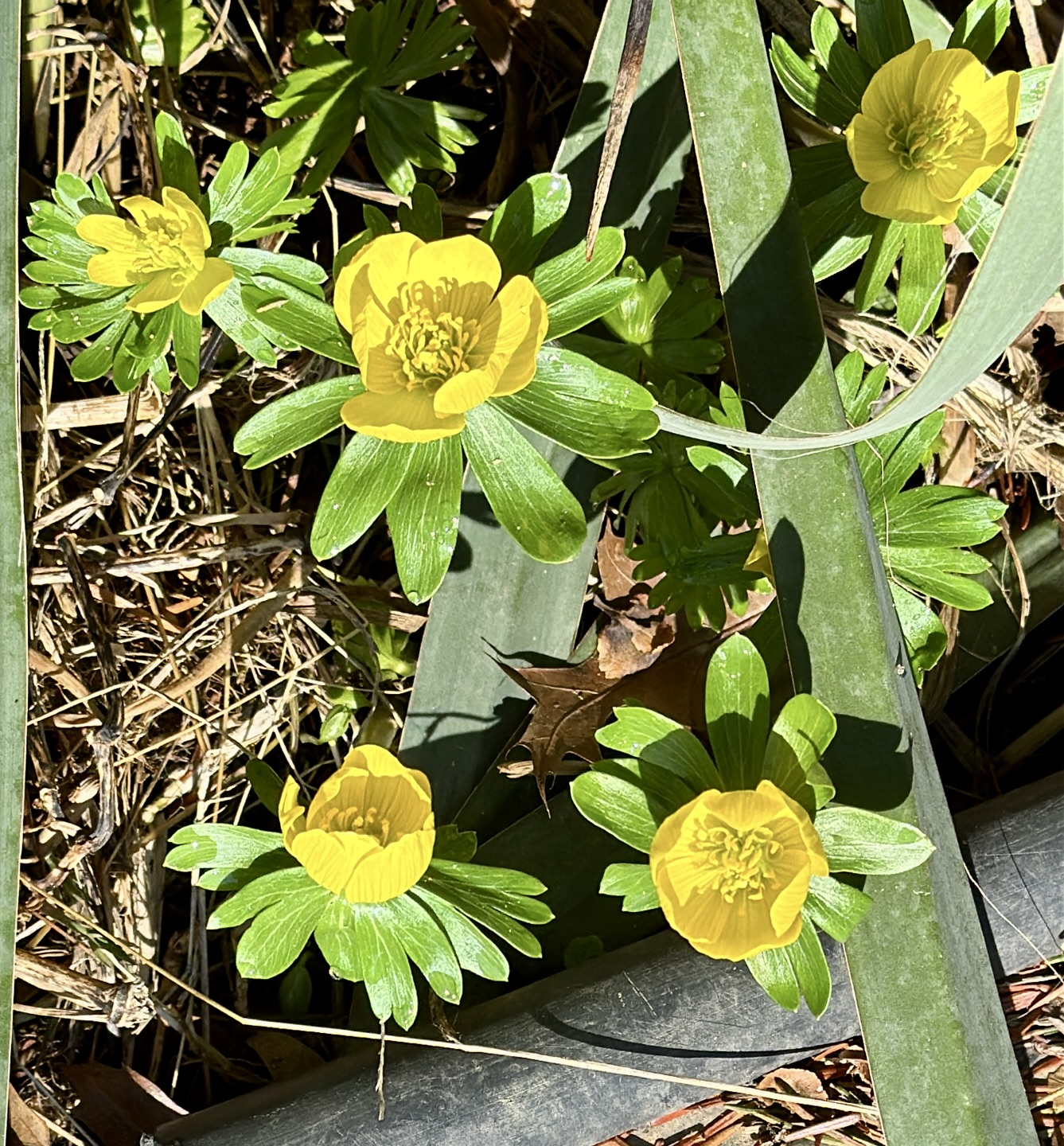
The Winter Aconite along the fence in the garden has been blossoming for a week or two. Started having warmer weather finally. It’s not a native plant, but we’ll take anything that hints of spring at this point.
Winter Aconite, Eranthis hyemalis, (L.) Salisb., is a species of flowering plant in the buttercup family Ranunculaceae, native to calcareous woodland habitats in France, Italy and the Balkans, and widelynaturalized elsewhere in Europe.
All parts of the plant are poisonous when consumed by humans and other mammals, because it contains cardiac glycosides similar to those present in Adonis vernalis. Specific cardiac glycosides present in E.hyemalis include Eranthin A and B, belonging to the bufadienolide group, also found in (and named for) the toad venom bufotoxininclude colicky abdominal pains, nausea, vomiting, diarrhoea, disturbed vision, dyspnea, bradycardia, and, in severe cases, cardiac arrest. Specific cardiac glycosides present in E.hyemalis include Eranthin A and B, belonging to the bufadienolide group, also found in (and named for) the toad venom bufotoxin.
– Wikipedia